
Jo Daviess Same-Day Arrest Check
Jo Daviess County offers no searchable 24-hour or 48-hour booking feed. Its Jail & Inmate Information page covers visits, communication, inmate funds, bonds, releases, and fingerprinting, but no names appear there. Booking times are missing too. So are charges, photographs, and custody status. The Sheriff page keeps jail records and arrest files. Still no public roster. A same-day check therefore begins with the arresting agency and the Jo Daviess County Jail. A city officer's arrest may leave an incident report at that department and a booking record at the jail. Some people are cited and released. They never reach jail custody, and a transfer can move someone out of the local channel just as fast.
Jo Daviess Arrest Verification Steps
Start with the official Jail & Inmate Information page. Then pinpoint the arresting agency: the Sheriff, Galena Police, Stockton Police, East Dubuque Police, or another office. Records split easily. The arresting office may hold the incident report while the jail keeps intake, bond, and release records.
- Record the full name, approximate time, and location.
- Call the Sheriff at 815-777-2141 and ask whether current custody can be confirmed.
- Ask the arresting police agency for its report route.
- Request the booking sheet, arrest report, bond or release record, and photograph if releasable.
- Check the Circuit Clerk and Judici later for the court result.
Phone answers depend on staffing, identity details, release status, and legal limits. Written requests last better. Jo Daviess County's 2026 Sheriff FOIA posting names Jenny Daum at 330 North Bench Street, Galena, IL 61036. It lists 815-777-2141, fax 815-777-9284, jdaum@jodaviesscountyil.gov, and sheriff-administration@jodaviesscountyil.gov. The official Sheriff page displays the office's contact details.
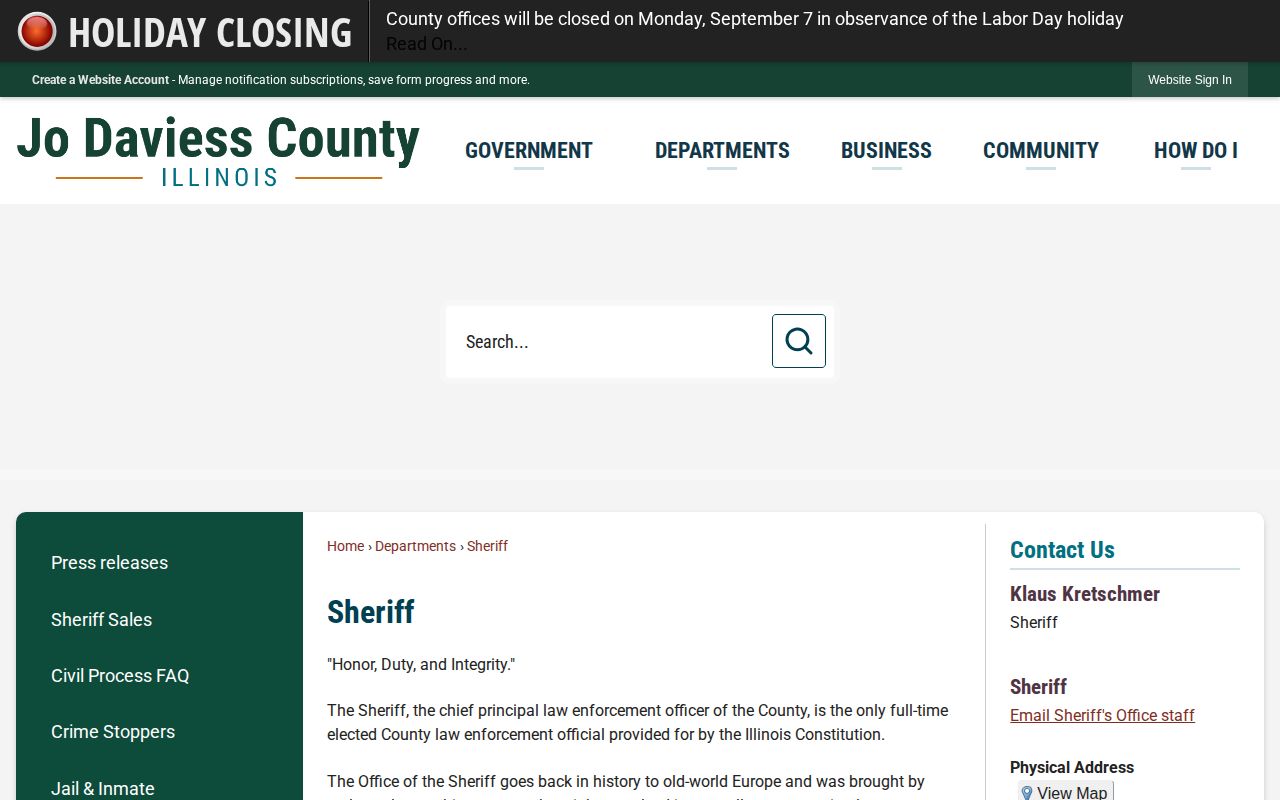
The capture distinguishes the government source from commercial jail directories.
Jo Daviess 24-Hour Record Fields
No official same-day interface exposes a fixed field set. Illinois jail-inspection material still confirms the basics. Detainees are identified, fingerprinted, and photographed at admission, and booking records are maintained. That supports a direct record request rather than an assumption that the facts sit online.
| Field to request | What it may clarify |
|---|---|
| Name and booking number | Identity and event reference |
| Arrest and booking times | Street arrest versus completed intake |
| Arresting agency | Who may hold the police report |
| Charges as booked | Charges recorded at intake |
| Bond | Terms recorded at that stage |
| Release or transfer | The last status recorded by the jail |
| Booking photograph | An image only if maintained and releasable |
Not every field must be disclosed. Active proceedings, safety, correctional security, and juvenile protections can each restrict access, so ask for releasable portions and the basis for any redaction.
When Jo Daviess Booking Starts
Arrest, transport, and completed booking are three separate points. During intake, staff confirm identity, create records, take fingerprints and a photograph, and enter the booking data. A call before intake ends may draw a blank. The county publishes no local promise on how long that work takes. The gap here is record creation versus web visibility. Jo Daviess County maintains the booking record but posts no live name-search roster, so waiting for a page update bridges nothing. Use the jail call for immediate status. A focused request gets the actual record, and the Illinois arrest-report statute backs access requests.
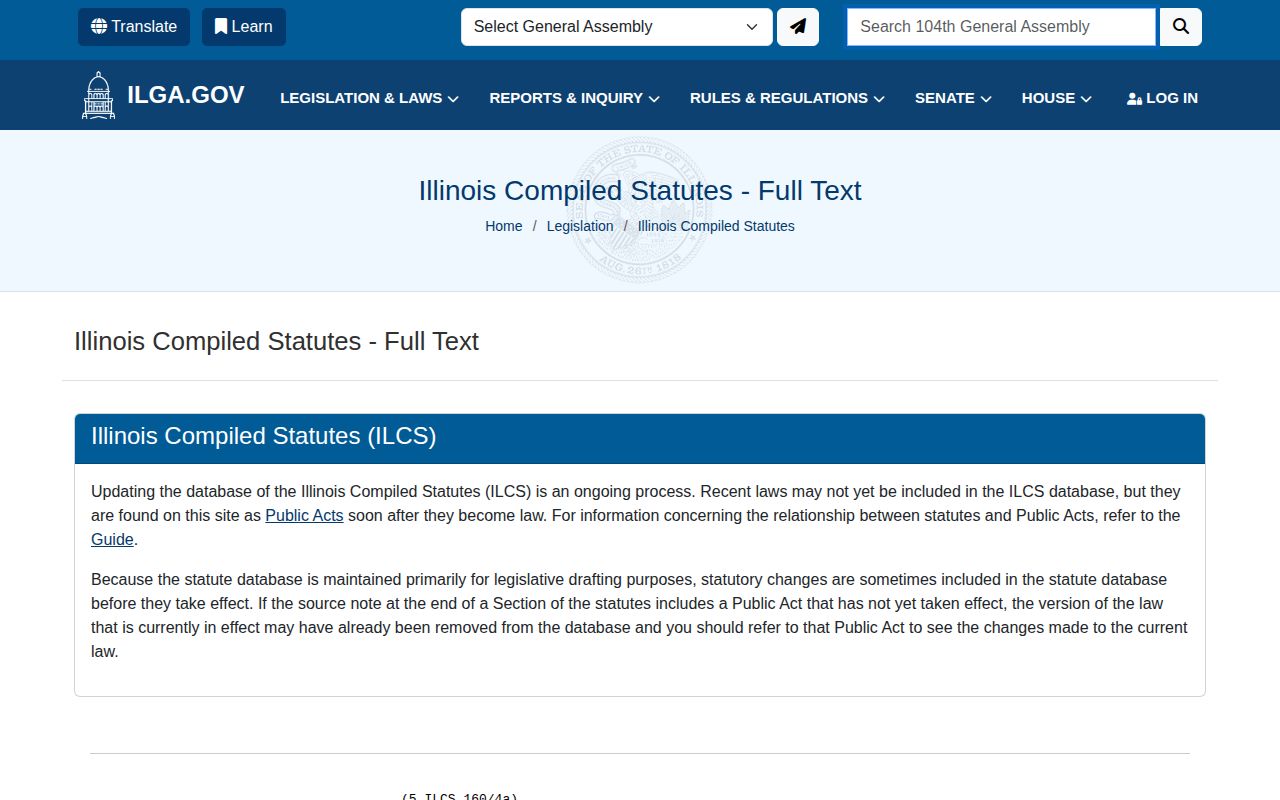
This source sets disclosure rules but does not create a county booking feed.
Illinois 72-Hour Arrest Rule
Illinois FOIA Section 2.15 sets a clock. Qualifying arrest-report information must be furnished as soon as practicable and no later than 72 hours after arrest, subject to exceptions. The law does not force a 24-hour website. Nor does it promise every field or photograph. "Last 24 hours" describes the searcher's window. It is not a county publication cycle, so request specifics. Ask for arrest time, booking time, recorded charges, bond or release details, and a photograph if one exists. The office may still need time to locate, review, redact, or route the material.
Note: A statutory disclosure deadline and a live website update are different processes.
Jo Daviess Release Changes Fast
The jail's stated capacity is 27. Bond-outs, court orders, transfers, and releases can flip custody quickly. Jo Daviess publishes no data-lag figure. There is no roster snapshot to measure against either. A status learned in the morning may not hold by evening. The jail page documents a $25 bond fee, JailATM payments, and an 8:00 a.m. release time for sentenced inmates unless a court order says otherwise. None of that says when booking data is created or removed. Ask for recorded status and time. Never draw a conclusion from silence. The VINELink Custody Check page explains free custody alerts; VINE may help once intake reaches a participating system, but a brand-new booking is not guaranteed to appear at once.
Jo Daviess Arrest Photos
The jail page offers no mugshot search or gallery. An admission photograph may exist in the file, but an image taken for identity is not automatically published. Ask for the booking photograph if it is releasable. A news image is not a substitute. Neither is an old third-party thumbnail, which may reflect a different event entirely. Keep the sheriff record, the arresting-agency report, and the later court file together when checking identity and outcome.
Jo Daviess Arrests Are Allegations
A jail page only tells part of the story. It stops at booking. Everything after that belongs to the court file, and the Circuit Clerk and Judici carry that timeline. A same-day entry can show who was arrested, booked, released, or transferred. Use those exact terms when you ask. One answer is just a status at one moment, so match each question to the office that keeps that record.
City Arrests Reach County Records
Location usually points to the right custodian. Galena, Stockton, and East Dubuque each run their own police departments, while the Sheriff handles county patrol work and operates the jail. One arrest can leave a paper trail in several places. A city officer writes a report, the jail logs the intake, and state police or another agency may add its own layer. So ask two questions first. Who made the arrest? Where was the person taken?
Tailor each request to the office you contact. The city department wants the incident date, a rough location, and the type of report. The jail wants the full name, an approximate booking time, and the record sought, whether that is a booking entry, bond, transfer, or release. If an office does not hold the item, ask who does. That habit saves time and keeps a police call log from being mistaken for proof of jail admission.
Current Custody Versus Court Status
Any same-day search really runs on two clocks. The jail clock tracks intake, bond, transfer, and release. The court clock tracks filed charges, hearings, and disposition. A brand-new case may take time to show up in Judici, and a jail answer says nothing about how prosecutors or a judge will handle the matter. Check each system for its own purpose.
Custody confirmed? Then ask when that status was current and which facility holds the person. Released? Request the release record instead of guessing why. Bond, a court order, a transfer, or a finished sentence each generate different paperwork. A released person can still have an open case, and an arrest report survives even after charges change later.
For the court half, use the Circuit Clerk's official link to Judici. Match results by case details, not name alone. The clerk sits in the same 330 North Bench Street complex as the Sheriff, but the two keep separate records. Court files live with the clerk. Booking files stay with the jail.
Write a Focused Arrest Request
Narrow requests get faster answers. Give the full name, the arresting agency, and an approximate date and time. Name the exact records you want. Precise wording helps, so name the item. Think booking sheet, arrest report, admission photograph, bond record, release entry, or transfer record. Ask for electronic copies if the office offers them. Do not ask any office to certify facts beyond the record it keeps.
The older county form lists mail, fax, email, and hand delivery. The first 50 black-and-white letter or legal pages cost nothing. Later pages run $0.15 each, and unusual reproductions cost actual cost. It also allows five business days for a response, subject to lawful extension. For delivery, use the current 2026 FOIA contact and request an estimate. The quoted schedule promises neither a price nor the release of any particular item.
Missing photo or blank field? Read the explanation before assuming the item does not exist. "Not maintained" and "not held by this office" differ from "withheld under an exception." Those are three different outcomes. A clear follow-up can seek a referral to the correct custodian. It can also seek the releasable portions of the same record.
Public Record Search
Sponsored Results