
Jo Daviess Multi-Day Arrest Sources
No Jo Daviess County office publishes a full 72-hour, seven-day, or weekly arrest log. The sheriff's press-release archive comes closest. Its entries are dated. Search-warrant arrests, investigations, warnings, and enforcement activity fill the mix. The sheriff picks the events. Plenty of routine bookings never get a story, which rules out calling the archive a roster.
The Gazette adds a second layer. "For the Record" issues blend sheriff material with Galena Police call logs and short narratives spanning several dates. Editorial choice and print schedules shape what runs. Nothing there confirms who is actually in custody.
Read Jo Daviess Blotter Entries
Start from the known date and agency. The official Sheriff press-release archive comes first for county events, and it pays to compare the post date with the incident date. The two can differ. Events in Galena, Stockton, or East Dubuque also call for city-police material or local news.
- Set a date range broad enough to include delayed publication.
- Identify whether the item names the Sheriff or a city police agency.
- Separate a call for service from an actual arrest or jail booking.
- Note charges as charges and record the source date.
- Verify custody with the jail and follow the case through Judici.
- Request the source report when the published summary is incomplete.
Need same-day answers? The Arrests Last 24 Hours page handles that. A blotter search is slower, tracking what agencies published over days and how to reach material once it scrolls out of view.
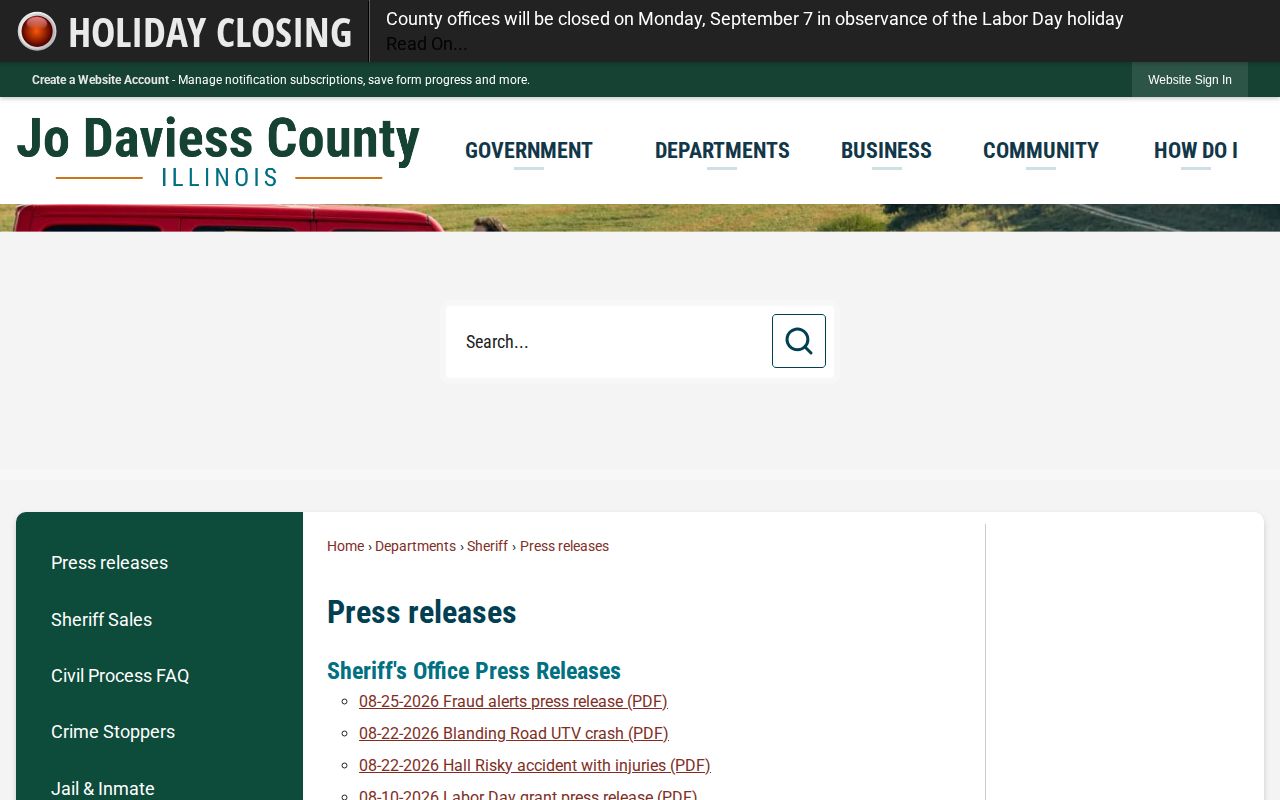
Subjects this varied show the archive is broader than any arrest ledger.
Jo Daviess Arrest Entry Fields
The source decides which facts appear. A press release offers narrative context. A newspaper call log may show only a date, time, place, agency, and event type. Structured details live in a formal booking or arrest report, so never merge fields from separate sources into one imagined county database.
| Possible field | How to interpret it |
|---|---|
| Publication date | When the item appeared, not necessarily the arrest date |
| Incident date and time | When the reported event occurred |
| Agency | The office that reported or handled the event |
| Location | The place described in the item |
| Charge wording | An charge at the reported stage |
| Custody or booking note | A stated handoff, not proof of present custody |
| Photograph | A news or agency image, not automatically a booking photo |
County jail inspections confirm that booking records and admission photographs are created. The press archive does not publish them. To get one, use the sheriff's records route. Ask only for material the office maintains and can release.
Jo Daviess Weekend Report Timing
Jo Daviess County posts weekend and holiday arrests on no fixed schedule. No complete official blotter exists either, so there is no baseline for measuring a "surge." Widen the date span instead. Search several days before and after the event. Compare the incident date with the publication date too.
Newspapers run on another cycle. A weekly "For the Record" section may group calls and narratives from several earlier dates. That makes it useful for history. It is poor for current custody. By the time an issue appears, a person may have been released, transferred, or never booked.
Note: Publication delay should expand the search window, never become an assumed fact about custody.
Sheriff Archive Is Not Roster
The sheriff's public archive runs wider than arrests. Accident investigations, fraud alerts, grants, safety notices, enforcement statistics, and search-warrant events all appear in it. That mix marks it as an agency communications archive. Cite a release for what it says, never as proof of every booking in a date range.
Press releases still carry weight. Each preserves an official statement and a date. Record the title, publication date, named agency, and incident date. When details or complete field values matter, ask the sheriff for the underlying arrest or incident report.
Local Jo Daviess News Layer
The Gazette offers the best multi-day local chronology around Jo Daviess County. One issue pairs a Galena Police active-warrant item with a sheriff report, including a municipal arrest taken to the sheriff's office for booking. An older issue covers sheriff and Galena Police call logs across a week. Those samples show the format. They promise no current cadence.
WGLR publishes local arrest and warrant stories too. It reports news rather than tracking jail status or court outcomes. The WGLR report on a man apprehended on warrants shows that role.
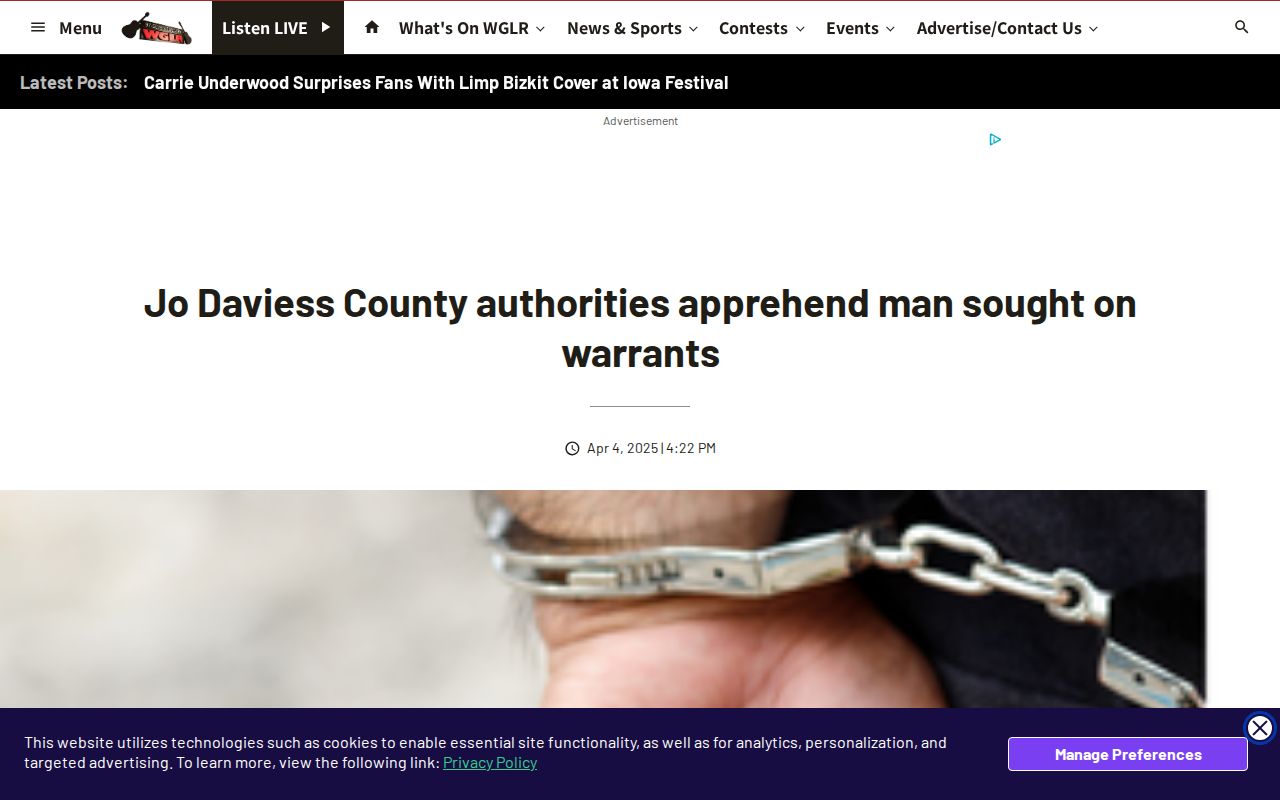
Use local reporting for context and dates. Then verify through the official agency and the court trail. Old third-party county pages surface in searches too. They cannot be trusted for present custody or freshness, so keep official sources first and treat stale entries with care.
Jo Daviess Court Timeline
A booking charge belongs to the arrest timeline. The court timeline starts later, when a case is filed. The Jo Daviess County Circuit Clerk keeps court records. The clerk also links to Judici for case status. A later entry may show amended charges, a dismissal, a plea, or an acquittal. It may also list conviction, supervision, a sentence, or another result. The Judici search landing page appears below.
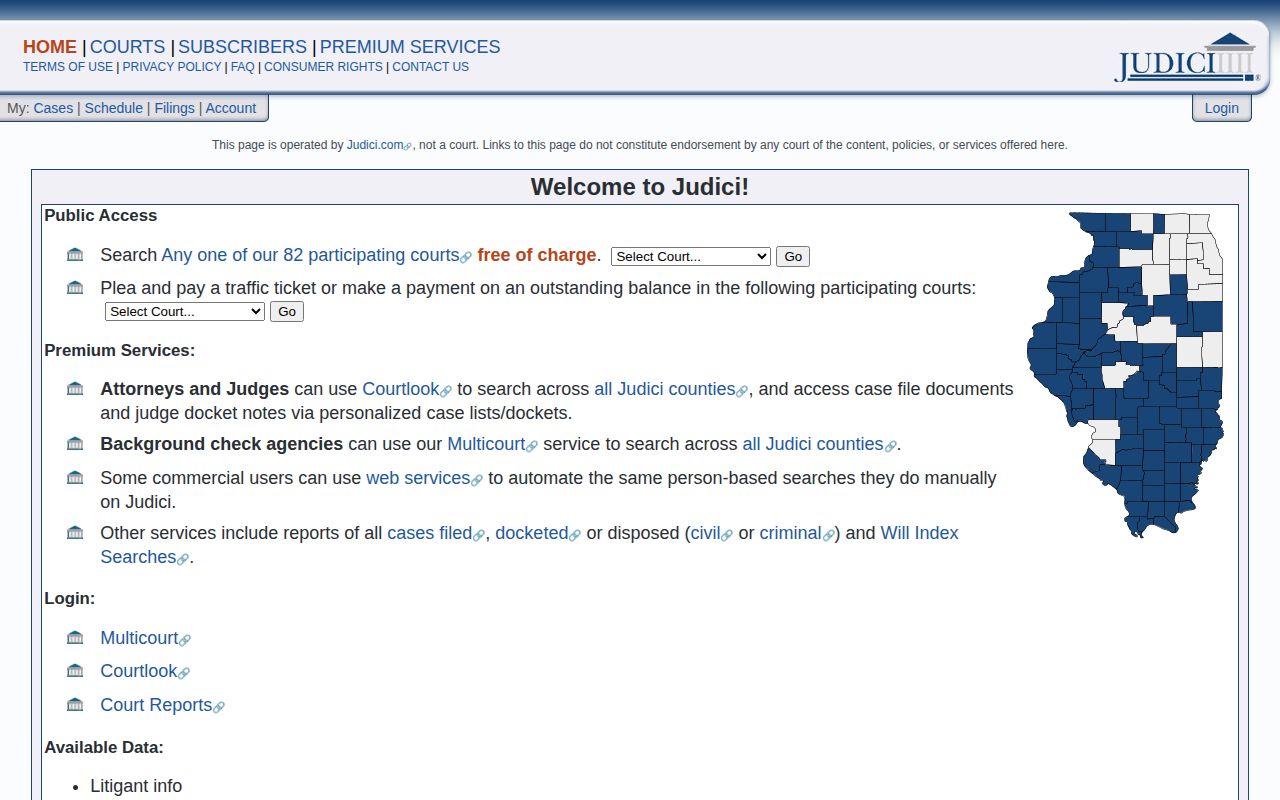
This court channel should follow, not be confused with, the Sheriff’s incident archive.
Jo Daviess Arrest Archives
Jo Daviess County arrest records do not sit under a single local online window. None carries a set roll-off date. Illinois keeps local records on approved retention and disposal schedules. The State Archives local-government search can point you toward historic holdings. So can the Jo Daviess IRAD page. Neither one promises current booking photographs, though. For anything absent from the public archive, ask the office directly.
A good request names the record series and the date range. It also states the retention or disposal status. The Sheriff's current FOIA route takes written or verbal requests. Mail works. So do email, fax, and a walk-in visit. Narrow the request to the person, agency, approximate date, and report type you want. The older county form offers the first 50 black-and-white letter or legal pages free. Later pages cost $0.15 each. Unusual copies may cost the actual amount. Ask for an estimate first.
One more caution applies. An item vanishing from the web does not mean it was destroyed. The agency may still hold the report. The online copy may just be hard to find. An archive listing, on the other hand, is no guarantee. The exact booking record or photograph may not survive. Confirm with the custodian before drawing conclusions about any Jo Daviess arrest document.
Separate Calls From Jo Daviess Arrests
A police call log in Jo Daviess County can cover many event types. Alarms, checks, traffic matters, complaints, and assistance all appear. Many of those events produced no arrest at all. A Sheriff press release can also describe an investigation without saying anyone was booked. Read the verbs closely. "Responded," "investigated," "cited," "arrested," "transported," and "booked" each mark a different step in the process.
When a report says a person was transported to the Jo Daviess County Sheriff's Office for booking, it documents a handoff. That handoff belongs to one moment in time. It does not show whether that person is still in custody today. The jail can confirm present status. The same care applies to warrants listed in a report. A warrant is judicial process, and it stands apart from any arrest that follows.
Request Missing Jo Daviess Reports
Public news layers are selective, so a complete Jo Daviess arrest picture usually requires a request to the custodian. Address a Sheriff request to the current FOIA officer. Spell out the office, record type, date span, person, incident location, and arresting agency. Ask for electronic inspection or copies. If Galena, Stockton, or East Dubuque police created the report, use that municipality's records channel rather than assuming the Sheriff holds every page.
Name the record you actually want. An incident report explains the reported event. An arrest report captures the arrest information. A booking sheet documents intake at the jail. A release record shows the jail's later action. Court documents belong with the Circuit Clerk. Asking for everything "about crime" gets less traction than naming the event and the series.
Illinois arrest-report law sets a prompt disclosure baseline for qualifying information, subject to exceptions. That rule is not a promise the archive will surface an event within a fixed number of hours. Expect redactions where disclosure could affect proceedings, safety, correctional security, juvenile privacy, or another protected interest.
Build a Reliable Blotter Timeline
For each Jo Daviess blotter item, save key details. Record the source date, incident date, agency, and exact status language. Add a court case only when the identity and event both match. That discipline keeps you from merging two people with similar names. It also stops a later court action from being read into the original news text. If a source changes, keep a citation and note when you viewed it.
A solid timeline can run through many stages. It moves from incident to arrest, booking, press release, court filing, hearing, and disposition. Those events may land on different days. The blotter is strongest at documenting public chronology. The jail and the court offices remain the authoritative sources for their own records.
Public Record Search
Sponsored Results